


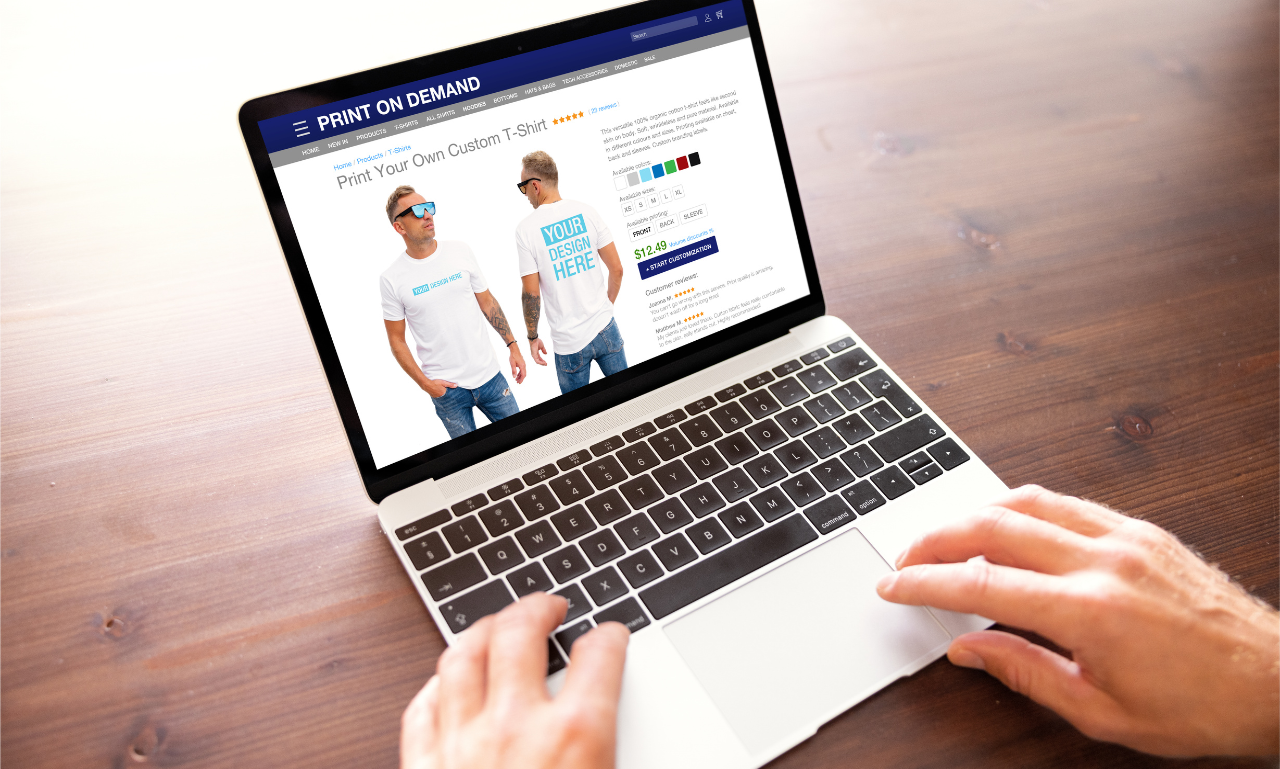
A product page can attract hundreds of visitors without producing a single order. The design may look polished, the listing may appear in search results, and shoppers may even click through from social media, yet attention never becomes revenue. Understanding why print-on-demand designs get views but no sales requires separating visibility from purchase intent and examining what happens after a potential customer reaches the listing.
Traffic and Buying Intent Are Different
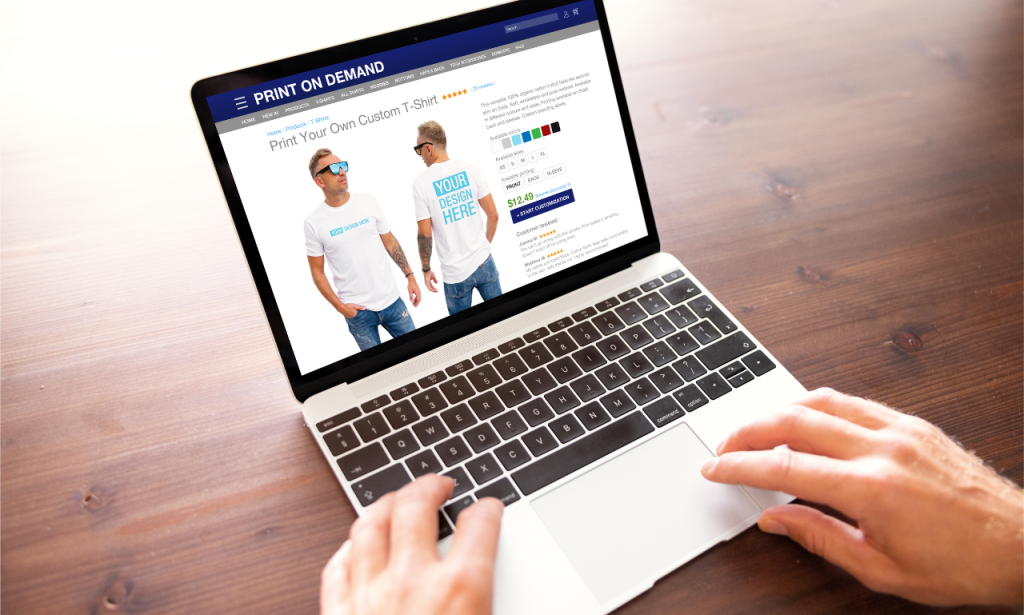
A view confirms that someone opened a product page. It says remarkably little about why that person arrived.
Some visitors are ready to buy. Others are comparing prices, looking for inspiration, checking several similar products, or simply following an interesting image from social media.
This distinction matters because sellers can easily interpret rising traffic as evidence that a product should be selling.
Traffic quality is often more important than traffic volume.
A small group searching specifically for a particular type of shirt, poster, or mug may convert better than thousands of casual social-media visitors.
When views rise without orders, the first question should therefore be whether the listing is attracting potential buyers or merely attracting attention.
Why Print-on-Demand Designs Get Views but No Sales
A print-on-demand listing has to succeed at several stages.
The design must capture attention. The product needs to feel relevant. The presentation must establish confidence. The price has to make sense, and the purchasing process needs to feel worth completing.
A weakness at any stage can interrupt the sale.
This explains why attractive artwork alone is rarely enough.
Someone might like a graphic without wanting it on a T-shirt. Another shopper might love the product but consider shipping too expensive. A third may hesitate because the mockup makes quality difficult to judge.
Views show that the listing has succeeded in earning initial curiosity. Sales require the rest of the offer to survive closer examination.
A Design Can Be Attractive Without Being Buyable
There is a meaningful difference between appreciating an image and wanting to own a product featuring it.
Social platforms demonstrate this constantly. People like, share, and save visual content they would never purchase.
Print-on-demand sellers need designs that work as products rather than merely as standalone graphics.
Context matters.
A detailed illustration may look impressive on a large screen but become difficult to understand when printed on a small area. A joke may attract attention but feel too specific or temporary for someone to wear regularly.
Some designs also lack a clear audience.
They may be technically competent but fail to express an identity, interest, occupation, hobby, community, or sentiment strongly enough to motivate a purchase.
The difference between “that looks good” and “I want that” is where many potential sales disappear.
The Product May Not Fit the Design
Print-on-demand sellers can often place the same artwork on shirts, hoodies, mugs, phone cases, posters, bags, and numerous other items.
That flexibility does not mean every design belongs on every product.
A design created around a phrase someone would proudly wear may work naturally on clothing but seem less compelling on home décor. Detailed artwork might suit a poster better than a small printed accessory.
Product choice also affects how the customer interprets value.
Someone might be willing to spend more on a hoodie featuring a design connected to an important interest but have little reason to purchase the same graphic on a generic mug.
Strong listings therefore consider the relationship between artwork and object.
The product should feel like the natural home for the design rather than another surface on which it happened to fit.
Mockups Can Create or Destroy Confidence
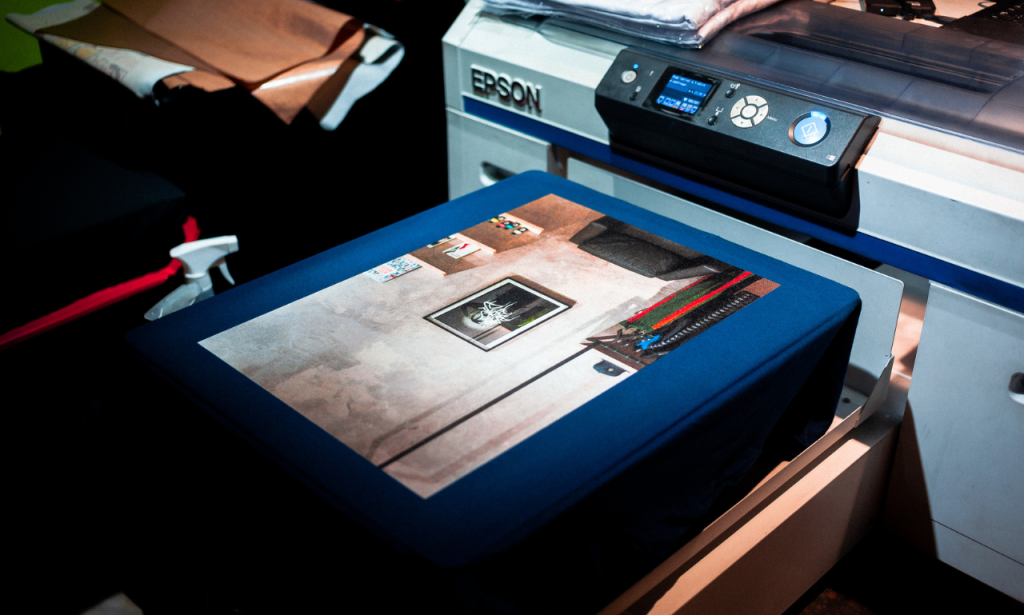
Online shoppers cannot touch the product before purchasing it.
They rely heavily on photographs, mockups, descriptions, reviews, and other signals to judge what will arrive.
Poor mockups introduce uncertainty.
A shirt shown only as a flat digital template may make it difficult to understand print size or placement. Colors displayed inaccurately can create doubts about how the final item will look.
Using too many unrealistic lifestyle images can create another problem. Customers may struggle to distinguish the actual product from the presentation surrounding it.
Useful product imagery should answer practical questions.
How large is the design? Where is it positioned? What does the item look like when worn or used? Are important details readable?
The closer the listing gets to answering those questions visually, the less imagination the shopper must supply before purchasing.
Price Is Judged Against Perceived Value
Print-on-demand pricing can be difficult because the production model often creates higher per-unit costs than mass manufacturing.
Customers do not necessarily consider that business model when shopping.
They compare the finished product with alternatives.
A $30 shirt may seem reasonable when the design feels distinctive, the product looks high quality, and the seller appears trustworthy. The same price can feel excessive when the artwork resembles dozens of competing products.
Discounting is not automatically the solution.
A low price can damage margins without fixing weak demand. It can even reduce perceived quality in some contexts.
The more useful question is whether the complete offer justifies the price.
Design originality, product quality, presentation, brand credibility, shipping, and relevance all contribute to perceived value.
If customers repeatedly view a listing and leave after seeing the price, the problem may be the number itself—or everything surrounding that number.
Shipping Can Change the Real Price
A product’s listed price is not necessarily the amount a customer evaluates at checkout.
Shipping can significantly alter the calculation.
A shopper might consider a product affordable at its displayed price but reconsider once delivery charges appear. Longer delivery estimates can create another reason to hesitate.
Print-on-demand fulfillment can make this particularly important because items may be produced only after an order is placed.
Customers accustomed to fast e-commerce delivery may have different expectations.
Sellers need to think about the total purchasing experience rather than focusing only on the product-page price.
Unexpected costs late in checkout are particularly damaging because they change the deal after the shopper has already formed an initial expectation.
Clear delivery information helps customers make that calculation earlier instead of encountering an unpleasant surprise at the final step.
Generic Designs Face Heavy Competition
Low barriers to entry are one of print-on-demand’s attractions.
They are also one of its biggest challenges.
Many sellers can target the same hobbies, occupations, holidays, family roles, jokes, and cultural interests.
Popular niches consequently become crowded with products that look broadly interchangeable.
When shoppers see numerous similar designs, being acceptable is not enough.
The listing needs a reason to win the comparison.
That advantage might come from a more distinctive idea, stronger execution, better product selection, clearer presentation, or a more precise understanding of a particular audience.
Simply adding more generic designs can increase the size of a store without improving its competitiveness.
A catalog containing hundreds of interchangeable products may generate views because it appears in many searches, yet struggle to convert because few listings feel meaningfully different.
Search Keywords Can Attract the Wrong Visitors
Search optimization can successfully increase impressions and clicks while simultaneously weakening conversion.
The problem occurs when keywords are too broad or poorly aligned with the actual product.
Imagine a design intended specifically for experienced mountain bikers appearing for a broad search related to bicycles. Many people may click, but only a small portion of them belong to the intended audience.
The traffic is real. The relevance is weak.
Descriptions and titles should therefore help the right shopper recognize the product rather than trying to capture every remotely related search.
This principle applies beyond marketplaces.
Social hashtags, advertisements, Pinterest posts, and search engines can all produce impressive traffic numbers from audiences with little purchasing intent.
A lower-volume phrase that precisely describes the product may ultimately be more commercially useful than a popular term attracting loosely interested visitors.
The Listing May Not Establish Enough Trust
Customers buying from unfamiliar online sellers face uncertainty.
Will the product resemble the image? Is the sizing accurate? How good is the print? What happens if there is a problem?
Established brands benefit from recognition. New print-on-demand stores often have to establish confidence within the listing itself.
Clear product information helps.
So do realistic images, understandable sizing information, transparent fulfillment expectations, and consistent presentation across the storefront.
Customer reviews can become particularly influential because they provide information from people who have already taken the purchasing risk.
A lack of reviews does not make sales impossible, but it can increase the amount of uncertainty a new customer must accept.
Trust becomes even more important when the product is relatively expensive or intended as a gift.
Visitors may like the design and still choose a more familiar seller if the perceived purchasing risk feels lower elsewhere.
Too Many Choices Can Weaken the Decision
Offering options sounds customer-friendly.
Sometimes it is.
Problems appear when every design comes in a large collection of products, colors, styles, and variations that require shoppers to make repeated decisions.
Choice creates value when the differences matter. Excessive choice can create friction.
A customer who originally wanted a simple shirt may suddenly need to select between several garment types, many colors, and numerous design variations.
Some combinations may not even display the artwork particularly well.
Curating options can make a store feel more deliberate.
Instead of placing every graphic on every available product, sellers can select combinations where the design works visually and the product makes sense for the intended audience.
Fewer strong choices can sometimes convert better than a catalog that asks shoppers to assemble the product themselves.
Mobile Presentation Can Hide Important Details
A listing that looks excellent on a desktop monitor may perform differently on a phone.
That matters because many shoppers discover products while browsing mobile platforms.
Small screens change how images, titles, descriptions, and options are experienced.
Fine details in artwork can disappear. Long product titles become difficult to scan. Important information may sit below several screens of scrolling.
If the main product image does not communicate the idea quickly, a visitor may leave before exploring additional photos.
Mobile users also encounter interruptions easily.
Messages arrive, apps compete for attention, and checkout forms can feel more demanding on a small screen.
Print-on-demand listings therefore need to communicate their strongest selling points without assuming the customer will carefully inspect every detail.
Seasonal Interest Can Produce Misleading Traffic
Some designs depend heavily on timing.
Holiday products, event merchandise, seasonal jokes, graduation themes, and trend-based designs may receive substantial attention during short periods.
Views do not necessarily mean the timing is ideal for purchases.
People may research Christmas products weeks before they are ready to order. A design connected to a viral trend may continue receiving clicks after buying interest has already peaked.
Seasonal products also face practical delivery concerns.
A customer who likes a holiday shirt may decline to order if the estimated arrival date is too close to the event.
Sellers should therefore interpret traffic within its timing context.
A listing performing poorly in February might behave very differently in November, while a once-popular trend may never recover its previous conversion rate regardless of how many historical views the page accumulated.
Conversion Problems Need to Be Diagnosed, Not Guessed

When a listing receives traffic without sales, changing everything at once makes it difficult to learn anything.
A more useful approach is to identify where shoppers appear to stop progressing.
If people see the product in search but rarely click, the main image or concept may be weak.
If they click frequently but do not purchase, pricing, product fit, presentation, trust, or audience targeting deserves closer attention.
If customers add items to their carts but abandon checkout, shipping costs, delivery estimates, payment friction, or unexpected charges may be involved.
These patterns are more informative than views alone.
Testing individual changes can also produce clearer information than repeatedly redesigning entire listings.
A different primary mockup, more appropriate product, clearer description, or refined audience target can reveal whether the underlying design actually has commercial potential.
Conclusion
Attention is only the beginning of an e-commerce decision. A shopper can appreciate a design, understand the joke, or admire the artwork without finding enough reasons to exchange money for the finished product.
That gap explains why print-on-demand designs get views but no sales. Traffic may come from people with weak buying intent, while pricing, shipping, generic concepts, poor mockups, product mismatch, or limited trust can introduce additional reasons to leave.
The useful response is not necessarily to chase even more traffic. Sellers first need to determine whether existing visitors are the right audience and what prevents interested shoppers from progressing. A design becomes commercially valuable when the artwork, product, audience, presentation, price, and buying experience reinforce one another. Views reveal curiosity; conversion reveals whether the complete offer makes sense.
Also Read: Can AI-Generated Art Be Used for Print on Demand?
FAQs
Visitors may have low buying intent, or pricing, shipping, product presentation, trust, and design relevance may be limiting conversions.
Not automatically. First determine whether price is actually the problem rather than traffic quality or the product itself.
They can help by making product appearance, design placement, and quality easier for customers to judge.
No. A smaller collection of distinctive, well-targeted designs can outperform a large catalog of generic products.
