


Seventy percent of online shopping carts never make it to checkout — and a significant share of that loss traces back to one problem: payment friction. The gap between a customer deciding to buy and actually completing a purchase is where billions in revenue quietly disappear every year. These seven best practices for faster and frictionless payments address that gap directly.
What Are Frictionless Payments and Why Do They Matter?
Frictionless payments are transaction methods designed to remove obstacles between intent and purchase. Think tap-to-pay cards, mobile wallets, one-click checkouts, and background billing — systems where the act of paying barely registers as a step. Platforms like Uber, Amazon, and Apple Pay have made this the baseline expectation. When a customer finishes a ride and simply steps out, no fumbling for a card, no signing a receipt, that’s frictionless payment working as intended.
The business case is straightforward. A smoother checkout means fewer abandoned carts, higher conversion rates, and customers who are more likely to return. J.P. Morgan research found that 65% of consumers now expect one-click or frictionless checkout options, yet only 45% of merchants are actively prioritizing it. That gap is where competitive advantage lives.
The Real Cost of Checkout Friction
Before diving into solutions, it helps to understand exactly where friction comes from. The most common culprits are forced account creation, too many form fields, slow load times, and a narrow selection of payment options. Baymard Institute data shows that 17 of the top 30 reasons shoppers abandon carts tie directly to checkout experience — not product dissatisfaction or price.
Cross-border transactions compound the problem further. Around 94% of international shoppers expect to pay in their local currency, and 99% want access to their preferred local payment method. Retailers who ignore payment localisation aren’t just inconveniencing customers — they’re closing the door on international revenue.
Simplify Your Checkout Flow
The most effective starting point for reducing payment friction is also the most obvious one: cut the steps. Every additional screen, form field, or decision point between cart and confirmation is a moment where a customer can second-guess the purchase.
Guest Checkout Is Non-Negotiable
Forcing customers to create an account before they can pay remains one of the most persistent conversion killers in e-commerce. Many shoppers, particularly first-time visitors, will abandon rather than register. Offering guest checkout removes that barrier immediately. You can always invite account creation post-purchase, once the transaction is complete and goodwill is established.
Autofill support, address lookup tools, and pre-populated returning customer fields all contribute to a faster checkout without requiring users to do more work. The goal is a checkout experience where the path of least resistance leads directly to payment confirmation.
Offer Multiple Payment Methods
A significant share of cart abandonment comes down to a simple mismatch: the customer’s preferred payment method isn’t available. Accepting only cards excludes the growing segment of shoppers who rely on digital wallets, bank transfers, or Buy Now Pay Later options.
Mobile wallets alone have seen rapid adoption — the share of US consumers using one climbed from 38% to 49% between early 2021 and late 2022, and that trajectory has continued. BNPL, meanwhile, has expanded from a $37 billion market in 2021 to a projected $97 billion by 2025, driven by shoppers who want flexibility at checkout without applying for credit.
The practical approach isn’t to offer every payment method imaginable, but to identify which ones your specific customer base actually uses and ensure those are present.
Optimise the Mobile Checkout Experience
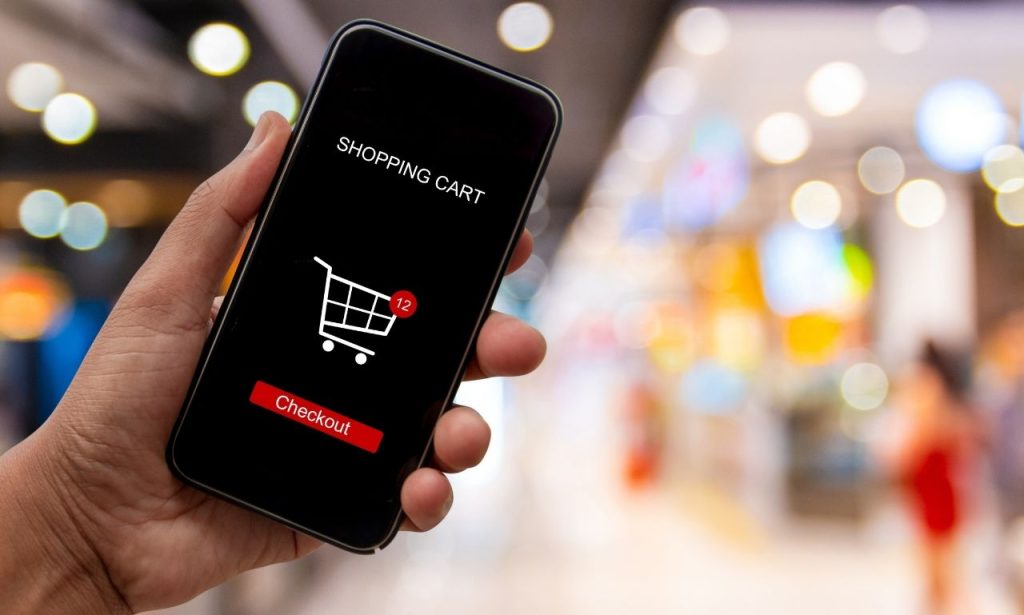
Mobile cart abandonment rates exceed 75% — noticeably higher than desktop — largely because most checkout flows weren’t designed with a small touchscreen in mind. Small input fields, tiny buttons, and pages that require horizontal scrolling create frustration that desktop users never encounter.
What Mobile Optimisation Actually Looks Like
Mobile-first checkout design means large tap targets, a minimal keyboard switch between fields, and native payment integrations like Apple Pay and Google Pay that let users authenticate with a fingerprint or face scan. Biometric authentication in particular resolves a specific mobile frustration: having to locate and manually enter a saved card. When a single face scan completes a purchase, the checkout experience becomes genuinely fast.
QR code payments are also gaining traction as a mobile-friendly alternative, with native camera support on iOS and Android removing the need for separate scanning apps.
Enable Tokenisation and Saved Payment Credentials
Tokenisation replaces a customer’s actual card details with a secure, encrypted token stored by the payment processor. For the customer, the effect is simple: they can pay with a single click on their next visit without re-entering card information. For the business, it means not storing sensitive financial data directly, which reduces compliance exposure under PCI DSS.
One-click checkout, popularised by Amazon but now available through most major payment processors, is built on this foundation. Returning customers represent a disproportionate share of revenue for most businesses, and removing every possible barrier to their repeat purchases compounds over time.
Use Risk-Based Authentication Instead of Blanket Security Steps
Security checks at checkout are necessary — but applying the same level of verification to every transaction regardless of risk level creates unnecessary friction for legitimate customers. The 3D Secure 2.0 protocol addresses this by allowing merchants to request exemptions for low-risk transactions, such as small-value purchases, recurring payments, and transactions from trusted devices.
When the risk score is low, the payment clears without an additional authentication step. When it’s elevated, the extra verification triggers. Customers making routine purchases from recognised devices don’t experience added friction, while genuinely suspicious transactions face appropriate scrutiny. AI-powered fraud detection operating at the gateway level makes these assessments in milliseconds, flagging anomalies without slowing down the checkout for everyone else.
Integrate Real-Time Payment Processing
Delays between payment submission and confirmation erode trust. When a customer clicks “Pay Now” and waits — watching a spinning indicator with no feedback — doubt creeps in. Did the payment go through? Was the card charged? Should they try again?
Real-time payment processing eliminates that uncertainty. Instant confirmation messaging, immediate receipt delivery, and live payment status updates all contribute to a checkout experience that feels reliable. This matters especially for mobile transactions, where network latency is a factor and users are more likely to close a tab if a page stalls.
Balance Speed With Security
Fast payments and secure payments aren’t in opposition — they require different thinking to achieve simultaneously. The businesses doing this well treat security as part of the experience rather than a checkpoint layered on top of it. Biometric authentication is a good example: it’s faster than typing a password and more secure than most static credentials. Tokenisation is another — it improves security while making repeat purchases faster.
The Merchant Risk Council put it clearly: the most successful organisations view security and user experience as complementary elements of a trusted payment ecosystem, not competing priorities.
Monitor, Test, and Iterate Your Payment Flow
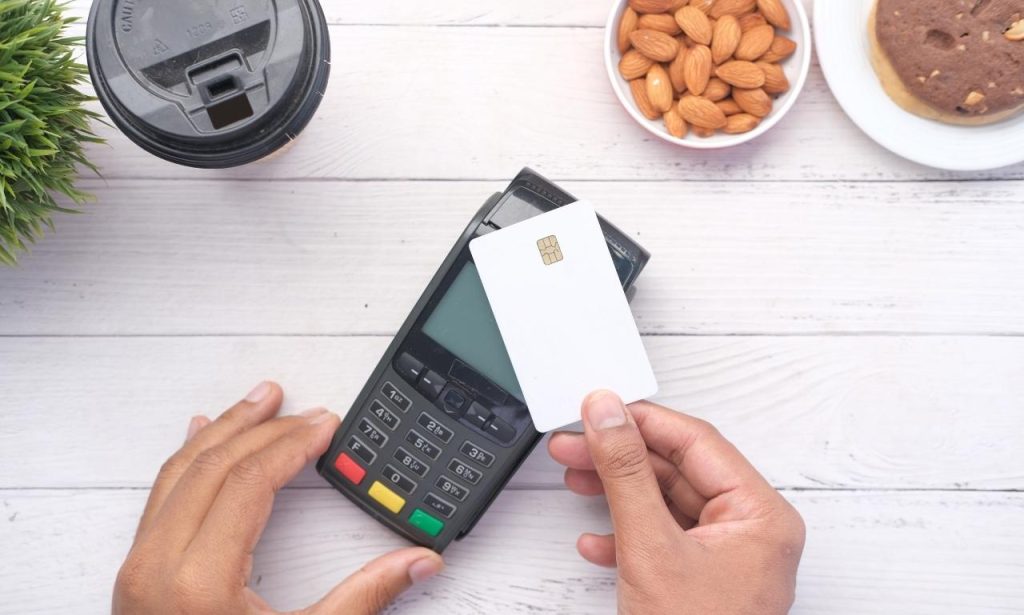
A checkout flow that converts well today may underperform in six months as customer behaviour shifts and new payment expectations emerge. Continuous monitoring of drop-off rates at each checkout stage reveals where friction is accumulating. A/B testing different checkout layouts, button placements, and payment method ordering surfaces what actually moves conversion metrics rather than what seems logical in theory.
Post-purchase surveys asking specifically about the payment experience provide qualitative context that analytics alone can’t deliver. Combining both approaches — quantitative funnel data and direct customer feedback — gives a complete picture of where the next round of improvements should focus.
Conclusion
Faster and frictionless payments aren’t a luxury feature reserved for large platforms. Every business that processes transactions online has both the tools and the incentive to reduce checkout friction. The practices outlined here — from simplifying the checkout flow and diversifying payment methods to implementing smart authentication and continuous testing — are each independently valuable, but their real impact compounds when applied together. The checkout experience is where purchase decisions are either confirmed or abandoned. Getting it right is one of the highest-leverage investments a business can make.
Also Read: Top 10 eCommerce Fulfillment Companies for Marketplaces
FAQs
Contactless cards, digital wallets, one-click checkout, BNPL, QR code payments, and biometric payments.
Complicated checkouts, long forms, forced account creation, and limited payment options are the main reasons.
Yes. Technologies like biometrics, tokenisation, and fraud detection keep transactions fast and secure.
Frictionless payments reduce checkout steps, while invisible payments happen automatically without customer action.
